3 min read
Learn about our recent Water Navigation Trials on the Llangollen Canal in our Summer Community Update
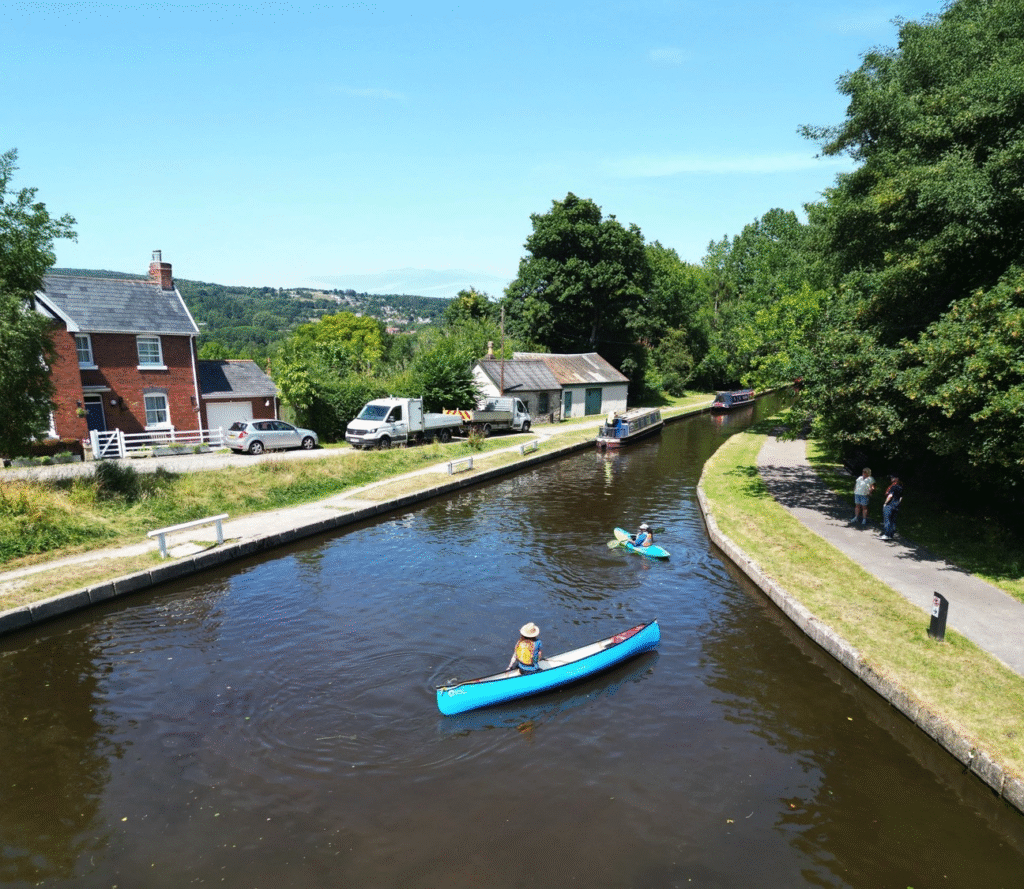
Our Summer issue of our Community Update is now available, and we’ve showcased what we’ve been learning in the Canal Section of the scheme. In July, we ran our water navigation trials taking volunteers on various crafts down the Llangollen Canal in Wales, to help us understand how the flow rate would impact their experiences. You can read more about what we learned in our Community Update and watch our video including interviews with the volunteers on our Resources page.
As climate change increases the risk of more droughts in parts of the UK, water transfers on canals, like the GUCT, are quietly becoming a key part of solving the water deficit challenge.
The UK potentially faces a daily shortfall of up to 5 billion litres of water by 2055, and using our historic canals to move water from areas of surplus to those under stress, like London and the South, is proving to be a practical and efficient step to support water resilience.
The Trust’s Llangollen Canal in North Wales is currently used as a water transfer by United Utilities, taking water from the River Dee to Hurleston Water Treatment Works, where, after cleaning, it supplies around 330,000 people.
It’s a great working example of a water transfer using a canal, demonstrating how historic infrastructure can be used to move water to areas of need.
We know from responses to our public consultation last October that canal users had questions about the impact the slightly increased flow rate of 0.3 metres per second (approx. 0.6 mph) along the canal would have on navigation. Our team have completed extensive technical work to understand the flows across the canal length and are building in design mitigations to ensure that this flow rate is not exceeded.
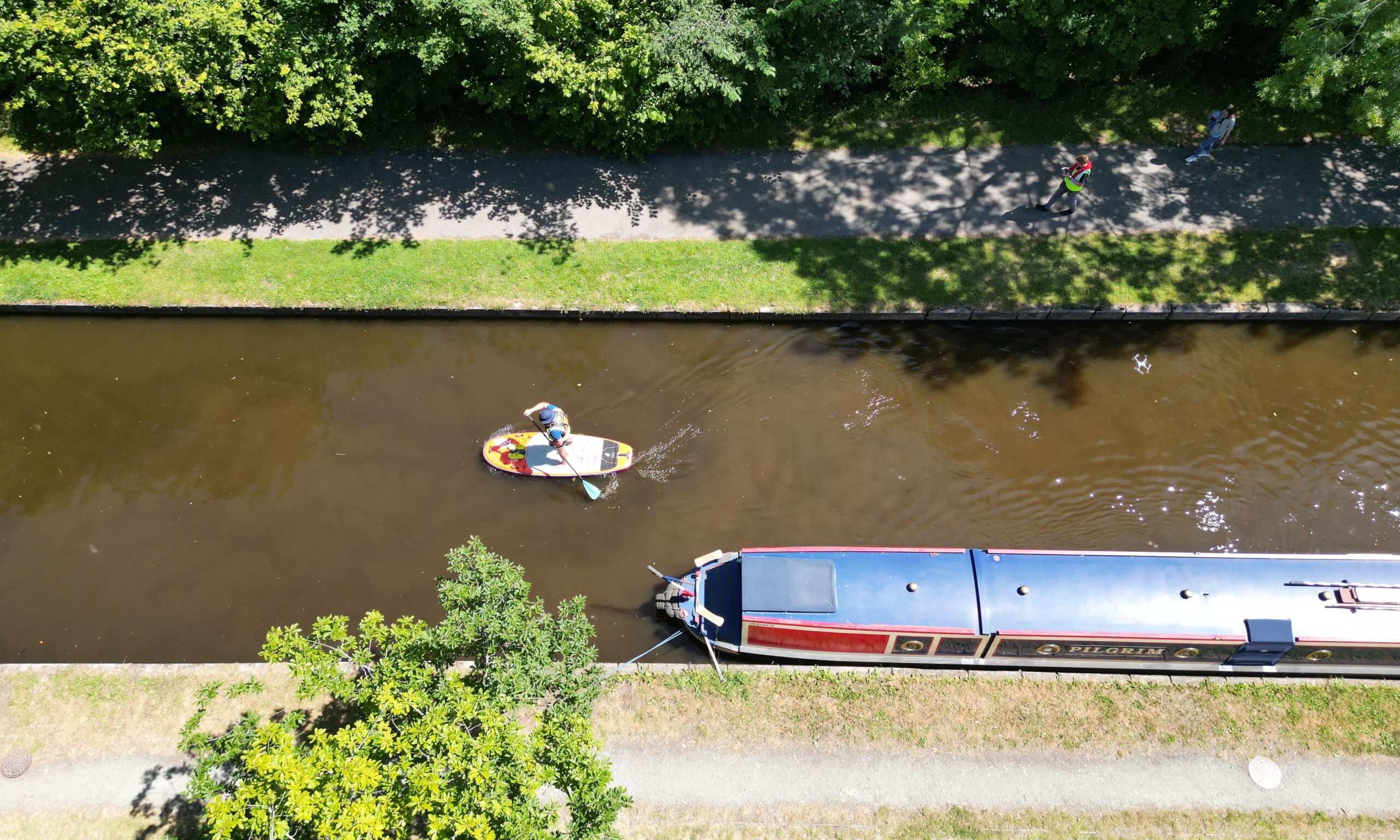
To help us understand the issues from a canal users’ perspective first hand, we carried out a navigation trial in the Trevor Basin area of the Llangollen Canal last month, to learn more about how water transfers on canals impact real life boating, kayaking and paddleboarding experiences. With the help of a group of volunteers, we tested a variety of craft along the canal section, at a similar water flow rate we expect the GUCT scheme will experience along the Coventry, Oxford and Grand Union Canals, once it’s operational.
The Llangollen Canal, although not an exact replica of the GUCT canal network, provides the closest real-life working comparison, and our trial clearly demonstrated that transferring water down the canal at the same rate we would use for our scheme, has no significant effect on how non-powered craft, such as kayaks and paddleboards, navigate and handle. Although the effect of the flow can be felt by powered craft, it does not detract from the overall boating experience.
You can learn more about what happened during our trials in our new video here, which includes interviews with the volunteers and footage taken along the Llangollen Canal.