5 min read
Surveys along the Grand Union Canal Transfer scheme’s route – from endangered species to historical artefacts
Ensuring we protect and preserve wildlife, and conserve heritage sites and architecture is vital to the development of the Grand Union Canal Transfer (GUCT), and our teams have been hard at work surveying the scheme’s proposed route.
Over the last 12 months, the GUCT’s Environmental team has been traversing the scheme’s proposed route, surveying the land that’s been identified for the transfer to be built and developed.
From locating badger nests to laying reptile mats and assessing the topography of the soil, our land and environmental teams have been examining the possible routes and locations that will be fundamental to transferring up to 115 million litres of water per day from the Midlands to the Southeast of England, to meet the growing demand on our water supplies.
Even though each survey has its own specific aims and will focus on identifying particular ecological, archaeological or heritage features, the overarching purpose of the surveying process is to support our design and engineering teams’ decisions on suitable locations and sites for the GUCT scheme’s infrastructure, while also mitigating environmental effects. The results of these surveys have helped inform our decisions to select potential sites for the Northern section of the scheme, and we’ve also progressed decisions about potential sites for the Southern water treatment works and water storage facility.
There are many variables at play when it comes to completing a survey, and these will differ depending on the subject matter. Many surveys are subject to seasonal differences, for example the optimal time to examine bat nests is during the summer months, whereas badger habitats are best surveyed throughout autumn and winter.
Some surveys can be undertaken throughout the year, such as the heritage surveys, which are crucial in identifying landmarks, architecture and infrastructure that must be maintained and preserved. An example is the Brinklow Motte and Bailey Castle, located in Rugby, Warwickshire. During the team’s survey, they identified the castle as one of the most prominent archaeological features that couldn’t be disturbed, owing to its status as a ‘scheduled monument’ by Historic England.
As a protected landmark and medieval castle, Brinklow Motte and Bailey Castle were built to command the line of the Fosse Way, a Roman road of strategic military significance during the medieval period. They also had links to the campaigns of William the Conqueror.
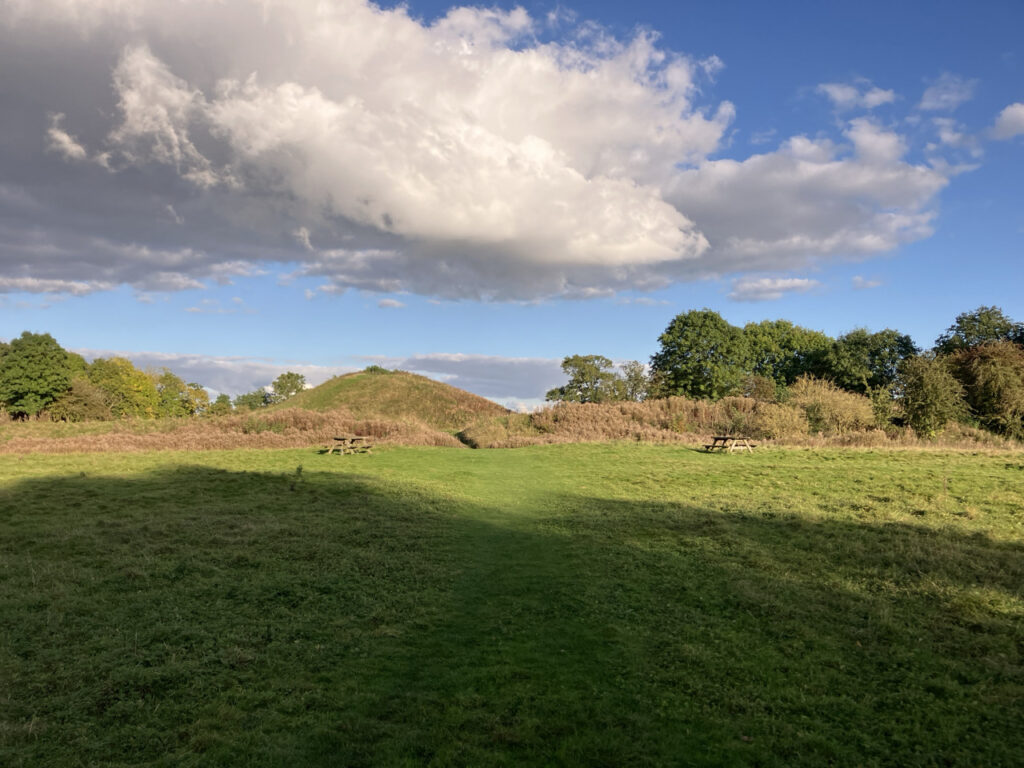
The remaining earthworks of Brinklow motte and bailey castle
Our team has subsequently incorporated the castle’s location and protected status into the design of our scheme and its route, ensuring that any work in its vicinity will not negatively impact its existence, or the public’s enjoyment of this important landmark. Some of the surveys the teams undertake require them to cover significant distances along the scheme’s proposed route. James West, Senior Archaeological Consultant at Aecom, spent two months last year completing heritage surveys along the length of the GUCT’s proposed route. He walked a staggering 77 miles, equal to 177,000 steps in just nine days, starting at Minworth in Birmingham, and concluding his journey at Fenny Stratford in Milton Keynes.
He said: “Surveys form a key part of our assessments on a project, and collating first-hand information is the best way to understand the asset that you are examining. For the heritage surveys, once we have the relevant data, we use this to identify key assets that we will need to get out and visit, to examine their conditions, construction materials and surroundings. All of this collected information is crucial for us to establish how a scheme such as the GUCT interacts with the heritage of an area, and informs how we can best preserve it.
“One of the most interesting things was the members of the public that I met along my travels, some offered advice and shared some intriguing knowledge about sites and assets that is only known locally. These conversations and interactions are really helpful with our assessments, but I also have a lot of time for those who are happy to stop and chat for a few minutes about the fascinating heritage that we are exploring.”
For more information about the surveys completed by the GUCT team, check out our surveys factsheet here.
Stay connected with the latest updates from across the GUCT by following our LinkedIn page here